


Vertical CNC lathes
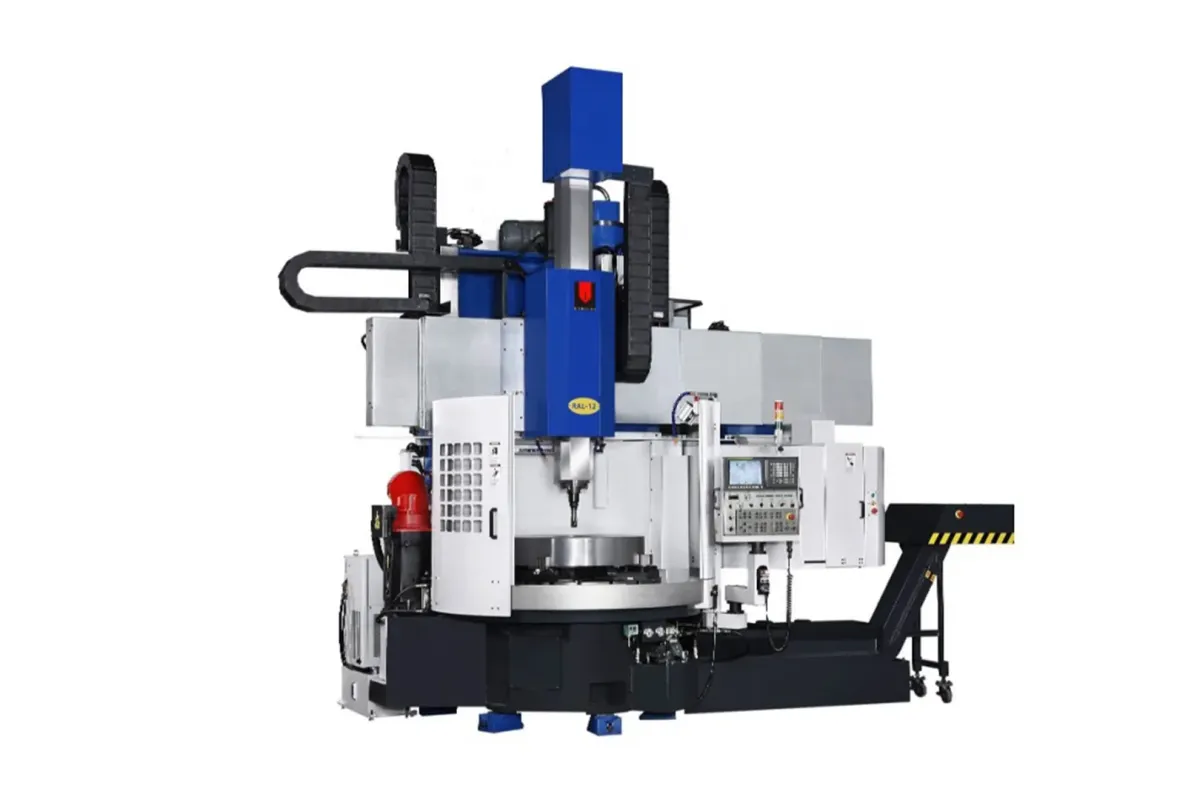
Vertical CNC lathe RAL-12Cs
| Technical specifications | |
|---|---|
X-axis travel: | 1700 mm |
Z-axis travel: | 900 mm |
CNC type: | Fanuc, Siemens, Fagor, Gsk, Syntec |
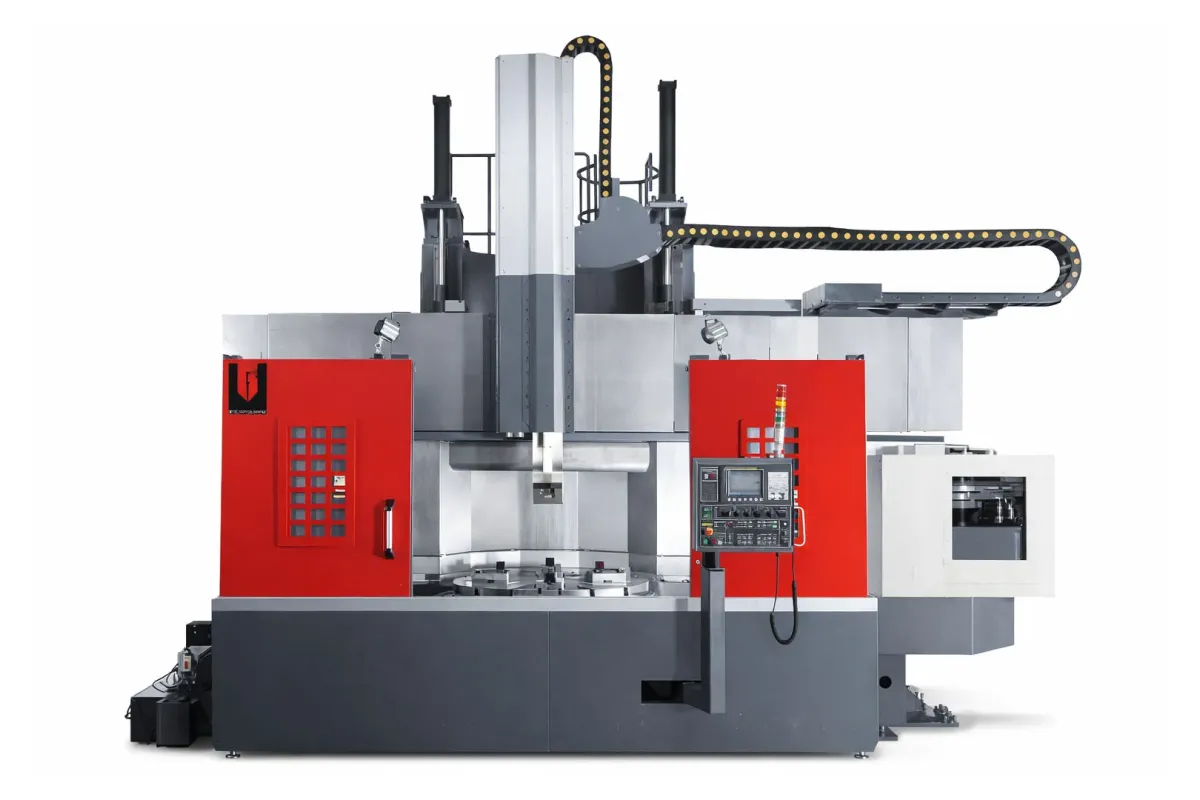
Vertical CNC lathe RIC-VT1600
| Technical specifications | |
|---|---|
X-axis travel: | -1020+1220 mm |
Z-axis travel: | 1000 mm |
CNC type: | Fanuc, Siemens, Fagor, Gsk, Syntec |
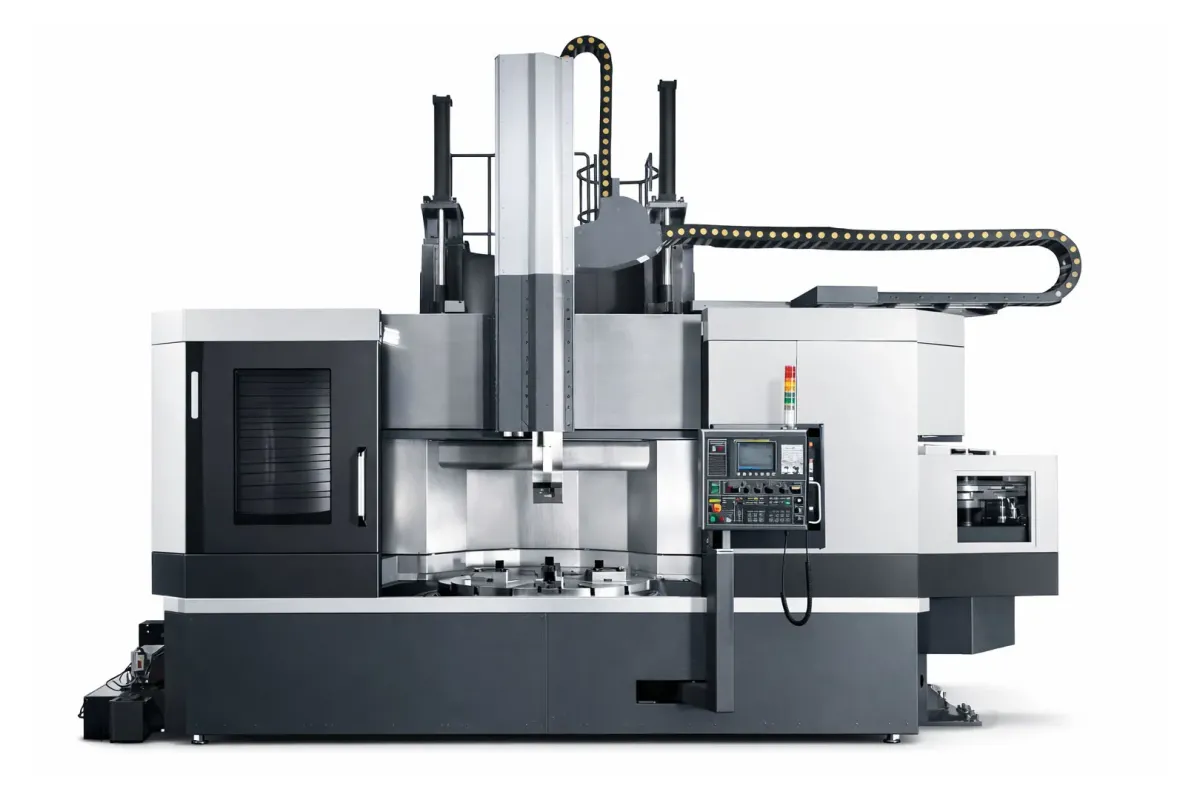
Vertical CNC lathe DV-3000
| Technical specifications | |
|---|---|
X-axis travel: | 2300 mm |
Z-axis travel: | 1200 mm |
W-axis travel: | 1400 mm |
CNC type: | Fanuc, Siemens, Fagor, Gsk, Syntec |
Vertical CNC lathes are CNC machine tools designed for machining large-diameter and heavy components, where stability and load capacity are essential requirements.
In a vertical CNC lathe, the workpiece is positioned on a vertical rotating table, using gravity to ensure stable centering and better control during machining of flanges, rings, bases, and structural components.
Why choose a vertical CNC lathe
The vertical configuration is suitable when:
- the workpiece has a large diameter and high weight
- high stability is required during turning operations
- large structural or industrial components are machined
- it is necessary to reduce vibrations on heavy masses
The vertical spindle arrangement allows better load distribution compared to a traditional horizontal lathe, reducing stress on the main axis.
Vertical CNC lathes for large components
Vertical CNC lathes are used in sectors such as energy, industrial plant engineering, and structural component manufacturing.
For cylindrical machining on long workpieces, a Flat Bed CNC Lathe may be more suitable, while for high-speed production and slant-bed kinematics, solutions are available in the CNC Lathes category.
Technical considerations before purchase
Adopting a vertical CNC lathe requires a preliminary analysis of maximum machinable diameter, workpiece weight, and required stability during rotation.
The capacity of the rotating table, available power, and tooling configuration directly affect productivity and surface finish quality.
For established production environments or machine fleet expansion, this solution can be compared with other configurations in the broader machine tools category, evaluating integration within the existing production flow.
A preliminary technical consultation allows identifying the most suitable configuration based on real loads, required tolerances, and the planned production cycle.
