


Gantry Type High Speed Machine Center
Ken CNC Gantry Machining Center
| Technical specifications | |
|---|---|
X-axis travel: | From 1600 mm |
Y-axis travel: | From 1000 mm |
Z-axis travel: | From 1200 mm |
Head type: | Manual / automatic |
CNC type: | Heidenhain, Siemens, Fagor, Fanuc |
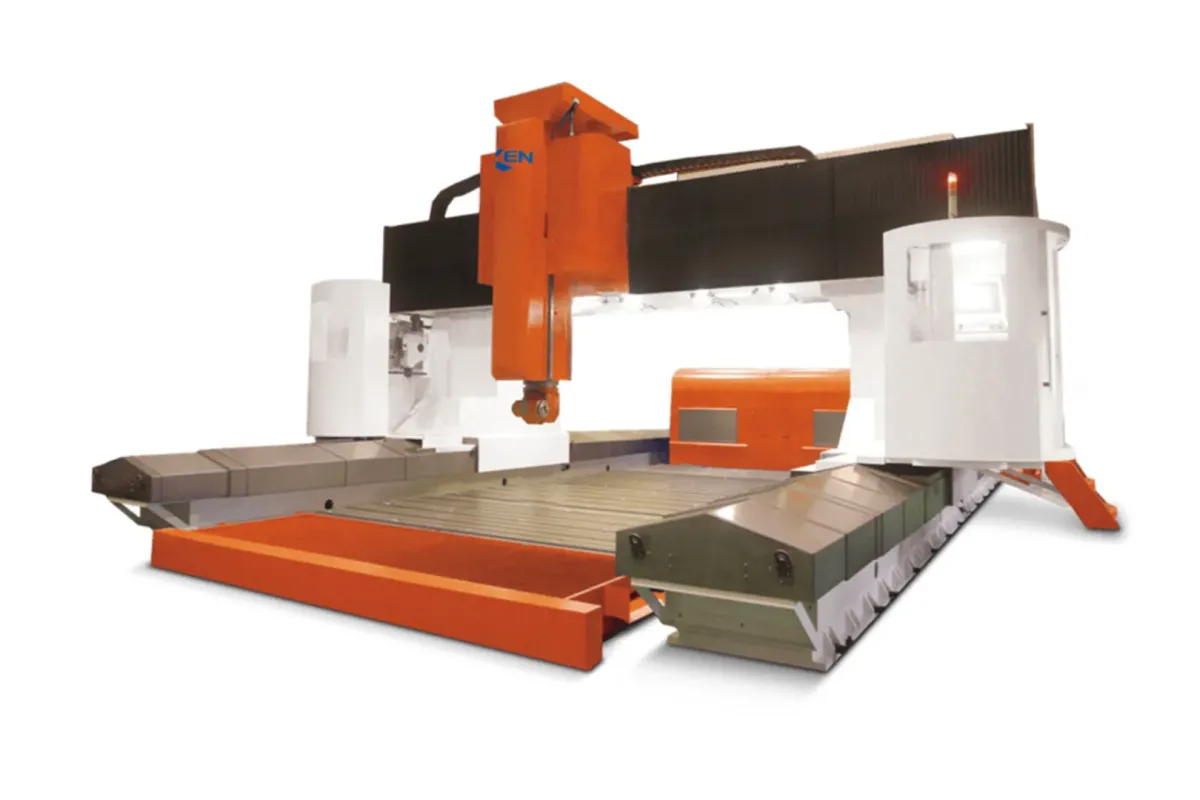
Ken Loader Series 5-Axis High-Speed Gantry Machining Center
| Technical specifications | |
|---|---|
X-axis travel: | From 8000 mm |
Y-axis travel: | From 4300 mm |
Z-axis travel: | From 1200 mm |
Head type: | Manual / automatic |
CNC type: | Heidenhain, Siemens, Fagor, Fanuc |
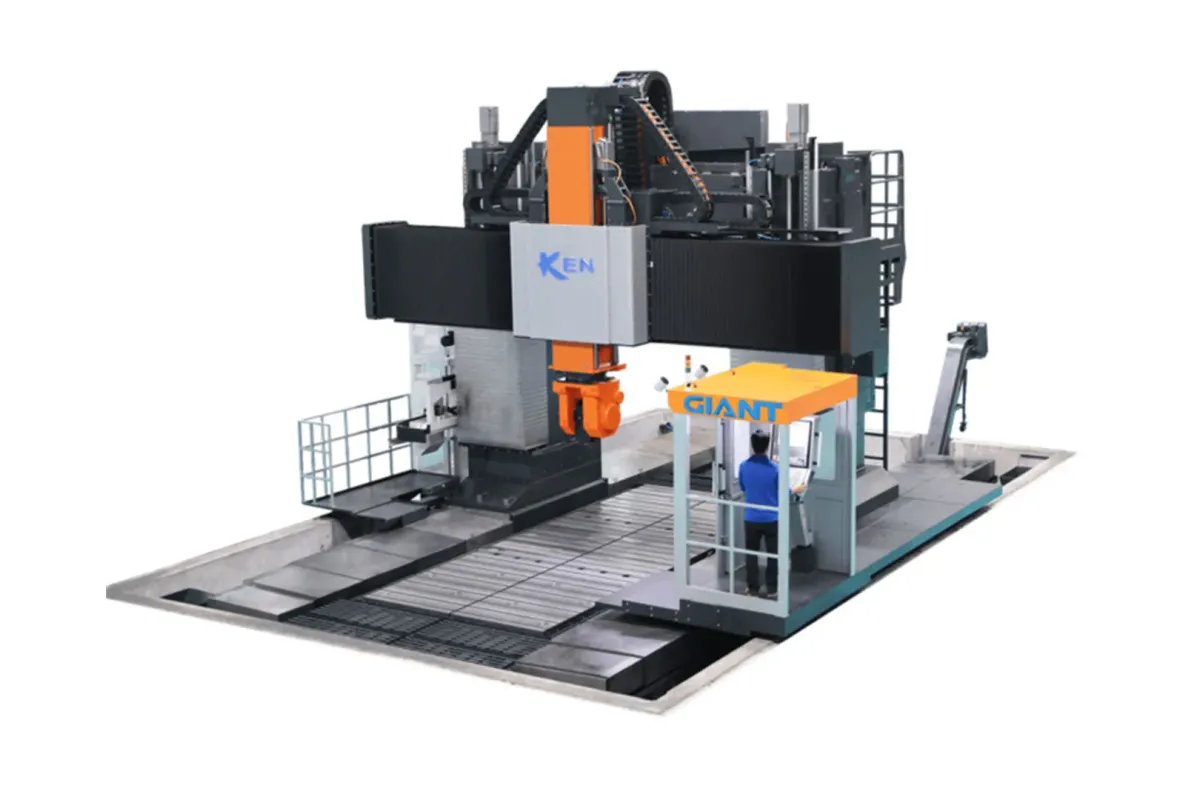
Ken Giant Series 5-Axis High-Speed Gantry Machining Center
| Technical specifications | |
|---|---|
X-axis travel: | From 8000 mm |
Y-axis travel: | From 4300 mm |
Z-axis travel: | From 1200 mm |
Head type: | Manual / automatic |
CNC type: | Heidenhain, Siemens, Fagor, Fanuc |
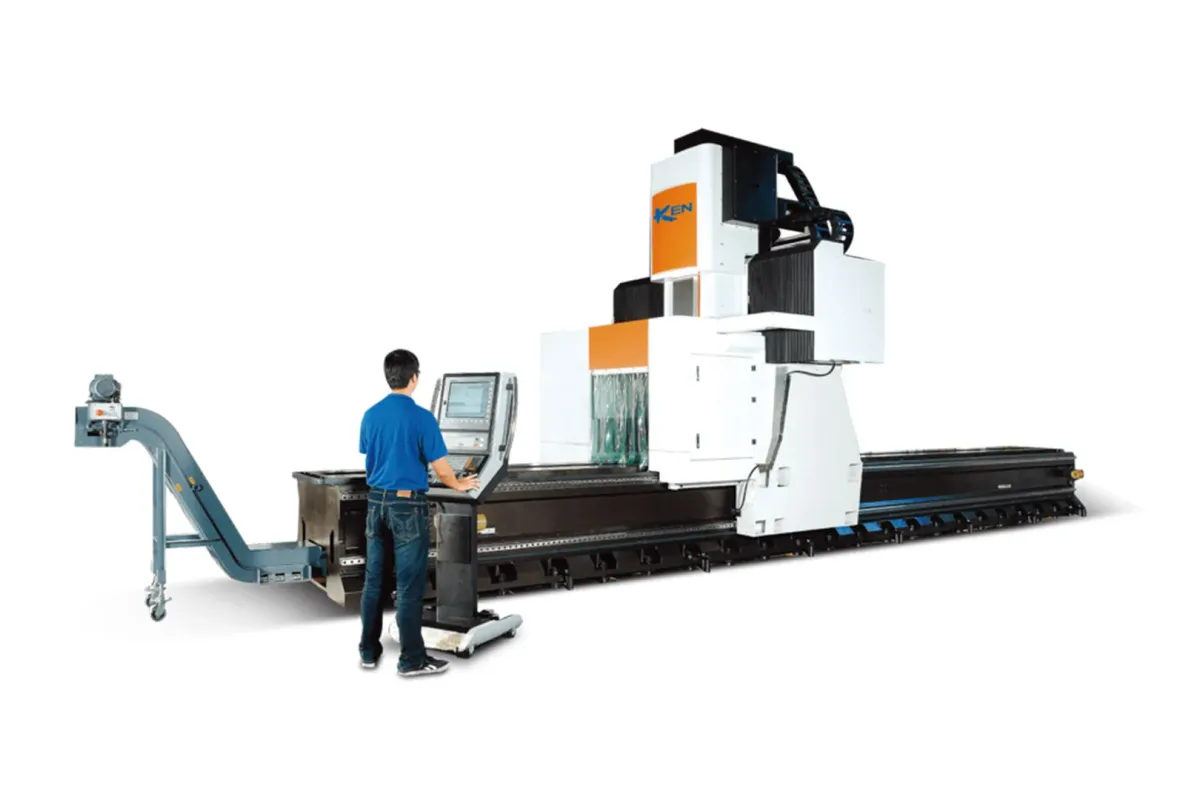
Ken Jet Series 5-Axis High-Speed Gantry Machining Center
| Technical specifications | |
|---|---|
X-axis travel: | From 8000 mm |
Y-axis travel: | 1000 / 1300 mm |
Z-axis travel: | 700 / 760 mm |
Head type: | Manual / automatic |
CNC type: | Heidenhain, Siemens, Fagor, Fanuc |
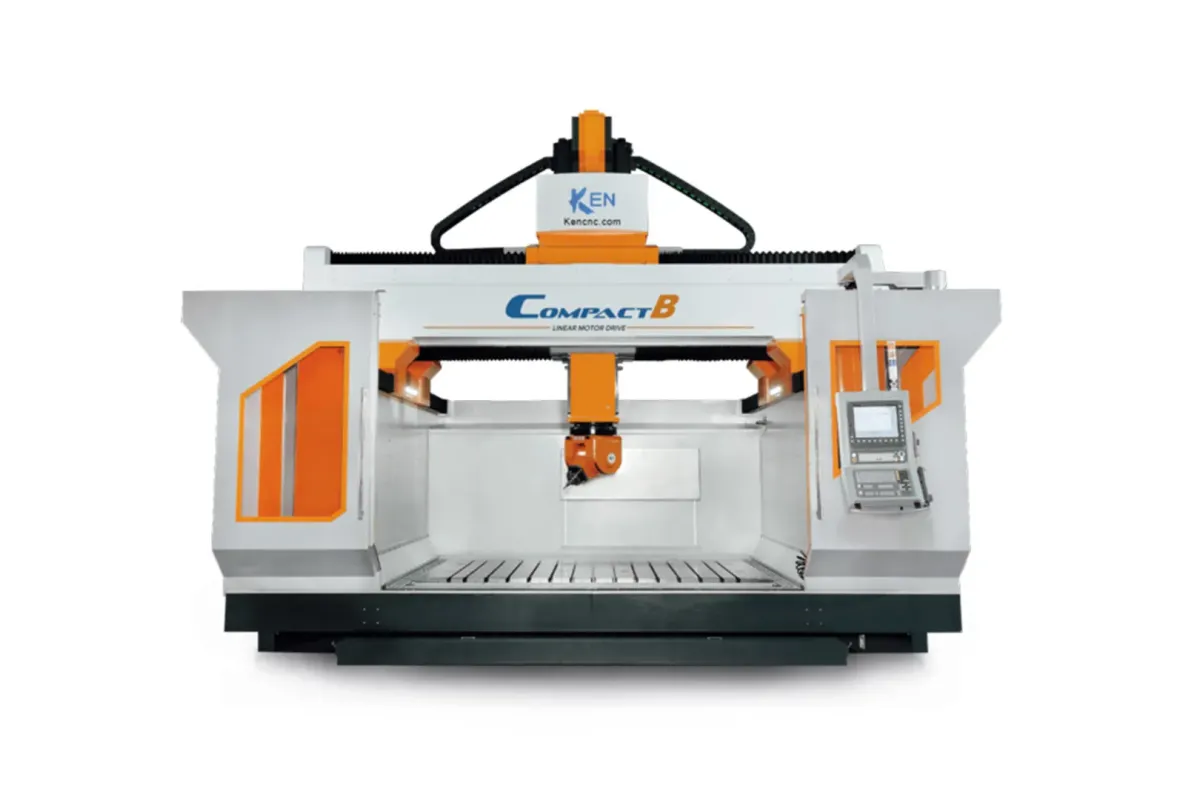
Ken CompactB Series 5-Axis High-Speed Gantry Machining Center
| Technical specifications | |
|---|---|
X-axis travel: | From 1600 mm |
Y-axis travel: | From 2500 mm |
Z-axis travel: | 1250 mm |
Head type: | Manual / automatic |
CNC type: | Heidenhain, Siemens, Fagor, Fanuc |
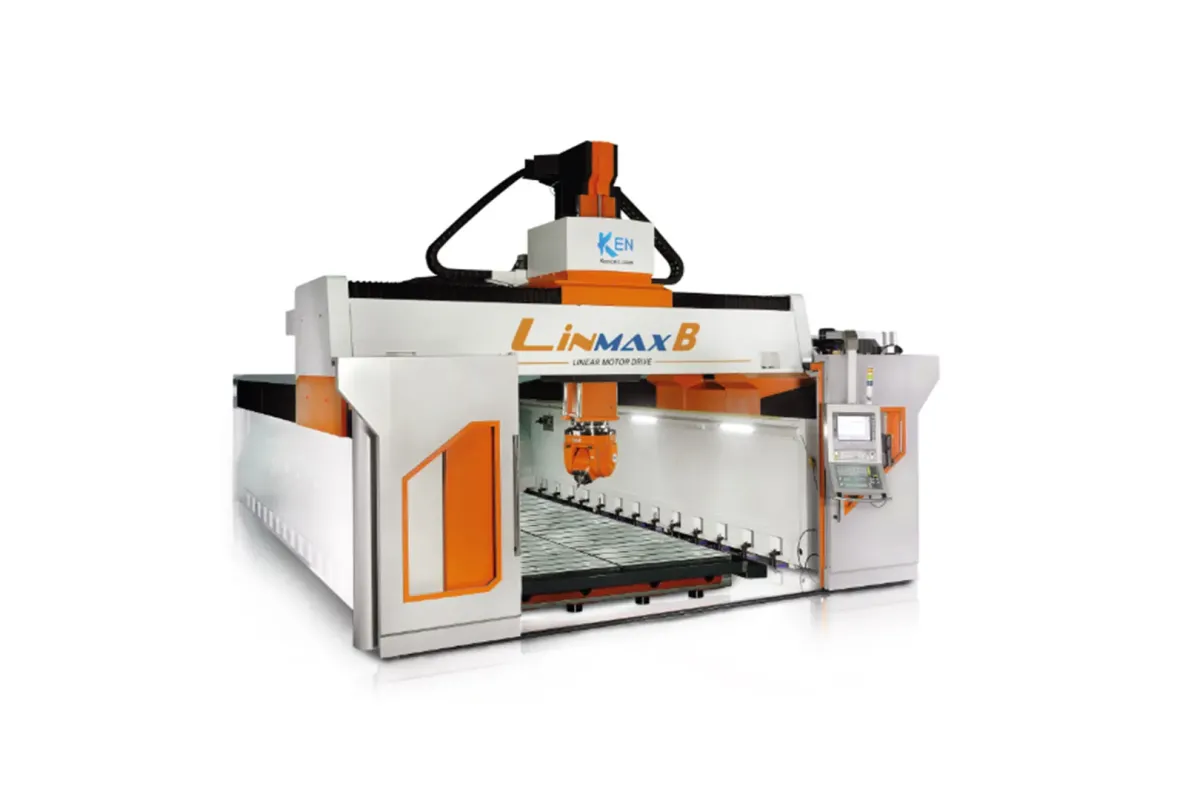
Ken LinmaxB Series 5-Axis High-Speed Gantry Machining Center
| Technical specifications | |
|---|---|
X-axis travel: | From 3200 mm |
Y-axis travel: | From 2200 mm |
Z-axis travel: | 1250 mm |
Head type: | Manual / automatic |
CNC type: | Heidenhain, Siemens, Fagor, Fanuc |
Gantry-type machine centers are new CNC machine tools designed for machining large surfaces and components, where structural rigidity, thermal stability, and long-cycle geometric precision become critical. In this context, Skio operates as a specialized technical supplier: it supplies, integrates, installs, tests, and supports gantry configurations aligned with parts, tolerances, and real production cycles.
In gantry (portal) configurations, the kinematics are built around a bridge that moves along the machine base. This architecture is suitable when long travels, continuous machining, and consistent geometric control are required during milling, drilling, and finishing operations.
What “gantry axes” means in a machine center
“Gantry axes” refers to a portal configuration where the machining unit moves along linear axes (X, Y, Z) on a bridge structure. The production logic is to maintain a stable working area and manage large volumes with a rigid and repeatable setup, reducing cumulative errors over long travels and extended cycles.
5-axis vertical machine centers
5-axis vertical machine centers add two rotary axes to the linear axes to increase the freedom of orientation of the tool or workpiece. This configuration is suitable when:
- surfaces are complex and require multiple orientations
- the number of setups and repositioning needs to be reduced
- uniform finishing is required on inclined or blended geometries
When the goal is to machine large panels, molds, models, or volumetric components, the combination of gantry structure and multi-axis configuration becomes an operational advantage: greater cycle continuity, fewer repositionings, and better control over results.
3-axis, 4-axis, 5-axis: how to choose
A 3-axis machine center operates on X, Y, Z and is suitable for “frontal” geometries. The 4th axis introduces controlled rotation (typically for indexing or machining multiple faces). The 5-axis further expands orientation capability, improving accessibility and reducing setup constraints when geometries become complex.
Integration and configuration of gantry machine centers
A gantry machine center is not just a machine tool: it is a production node that must be configured and validated on the real production cycle. Final performance depends on alignment between kinematics, working area, required rigidity, tooling strategies, and CNC control quality.
Skio integrates gantry solutions within structured production environments, managing technical activities that directly impact process stability and repeatability:
- installation and commissioning in the workshop
- CNC configuration and machining parameters based on the workpiece
- testing (geometric validation and performance verification)
- support and post-startup cycle optimization
Useful links within the machine fleet
To compare gantry solutions with other vertical configurations, it is useful to also explore vertical machine centers. If the priority is multi-face machining with efficient chip management, it may be worth evaluating horizontal machine centers.
Frequently asked questions about gantry and 5-axis machine centers
How many axes can a machine center have?
Machine centers can have 3 linear axes and, depending on the configuration, additional rotary axes (4th and 5th axis). The number of axes increases orientation flexibility but must be selected based on part geometry and the production cycle.
How much does a 5-axis machine center cost?
The cost depends on working area size, kinematics (head or table), automation level, equipment, and CNC configuration. Proper evaluation always starts from the workpiece, tolerances, and the number of setups to be reduced.
What are CNC machine centers?
They are machine tools that perform milling, drilling, and finishing operations through numerical control, with controlled axes and repeatable cycles. Real performance depends on rigidity, kinematics, and integration into the production flow.
What is the difference between vertical and horizontal CNC machine centers?
The main difference lies in spindle orientation and workpiece handling. Vertical machine centers are often the most direct choice for many operations; horizontal machine centers are advantageous when multi-face machining and continuous production are required in structured cycles.
Technical selection and configuration consistency
A gantry or portal machine center is evaluated based on usable travel, required rigidity, type of machining, and setup strategy. If the geometry requires complex orientations, a 5-axis configuration becomes a key factor in reducing setups and improving process stability. To define a solution aligned with your parts and production cycles, you can request a technical consultation.
