Machine Tools: A Comprehensive Guide to Machining Processes
Table of Contents
- What are Machine Tools?
- Classification of Machine Tools
- Most Commonly Used Machine Tools
- Types of Machining Processes
- Precision and Efficiency in Industrial Machining
Machine tools are the fundamental engines of modern industry—production systems specifically designed to shape, cut, and process various materials such as metal, wood, plastic, and ceramics.
These tools are the “hidden protagonists” behind the production of millions of everyday objects and serve as the beating heart of factories across every market sector. Essential in industrial manufacturing, machine tools allow for the creation of components with unparalleled precision and repeatability. In this article, we explore exactly what machine tools are and the diverse range of processes they enable.
What are Machine Tools?
Machine tools are mechanical devices designed to perform specific operations on materials, such as cutting, drilling, turning, and milling. The fundamental operating principle is the relative motion between the workpiece and the cutting tool, which removes material to achieve the desired shape.
While the origins of machine tools date back to antiquity—for example, the lathe has been used since Roman times—it was the Industrial Revolution of the 19th century that spurred a technological leap. Today, thanks to automation and Computer Numerical Control (CNC) systems, modern machine tools can execute highly complex operations with a level of precision that would have been unimaginable just a few decades ago.
Classification of Machine Tools
Machine tools are generally categorized based on the type of operation they perform and the movement they employ:
- Material Removal Machines: These remove excess material from a workpiece to achieve a specific shape through cutting. Examples include lathes, milling machines, drills, and grinders.
- Deformation Machines: These shape a workpiece by applying mechanical force. Typical examples include presses and press brakes, used for sheet metal and other metal forming.
Beyond this, machines are classified by their control system: manual machines require direct operator intervention, while CNC machines are fully automated, performing tasks via pre-programmed instructions.
Most Commonly Used Machine Tools
While machine tools cover a vast array of applications, the most prevalent in modern industry include:
- Lathes: Ideal for cylindrical or conical parts, essential for shafts, screws, gears, and other rotational components.
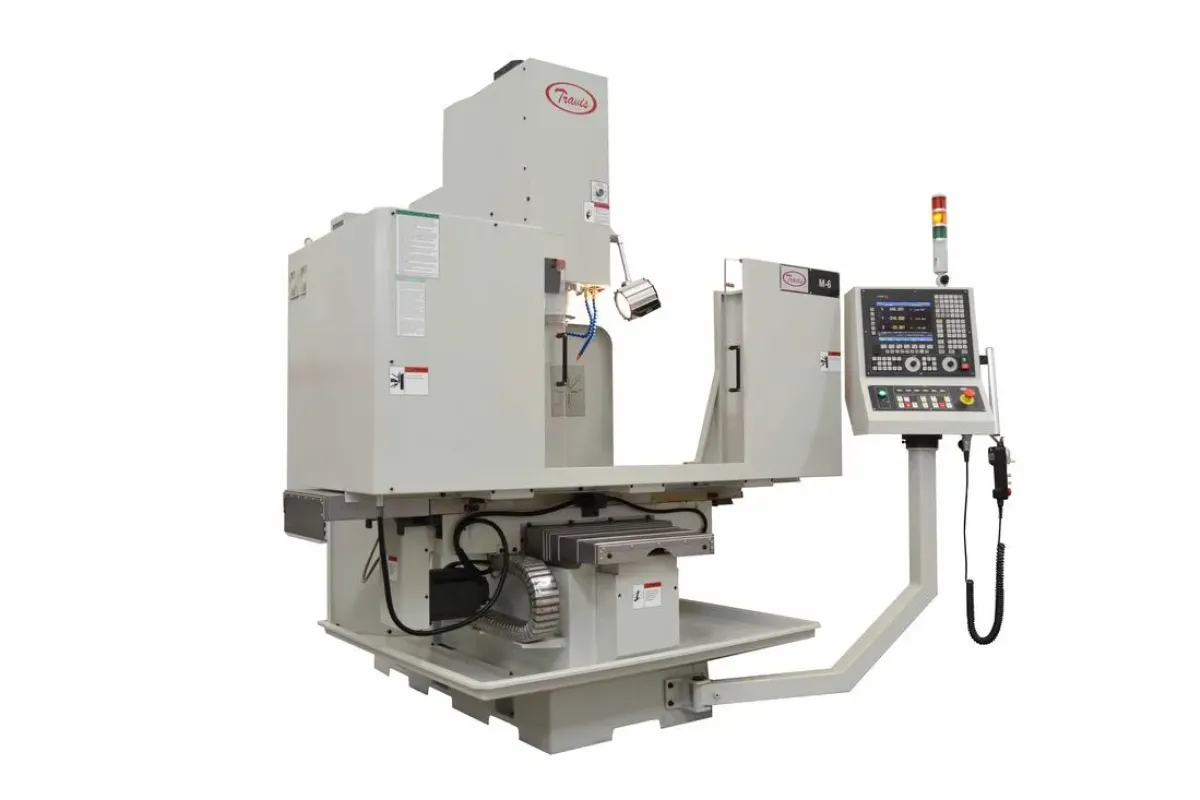
- Milling Machines: Versatile tools that use a rotating cutter to remove material from flat or curved surfaces, perfect for complex geometries, grooves, and teeth.
- Other Essential Equipment: This includes drills, grinders, and press brakes. Skio Macchine specializes in the supply of these machines—both new and used—providing quality support for a wide range of production needs.
Types of Machining Processes
Machine tools are highly adaptable, with common processes including:
- Turning: Removing material from a rotating workpiece to create cylindrical or conical shapes.
- Milling: Removing material from a surface, used to create flat or curved shapes, molds, tools, and gears.
- Drilling: Creating holes in various materials.
- Grinding: A finishing process used to achieve extremely smooth and precise surface finishes.
- Bending: Deforming sheet metal to reach specific angles or shapes, used for metal enclosures, structural components, and construction hardware.
These processes support vital sectors:
- Automotive: Engines, transmissions, and mechanical components.
- Aerospace: Lightweight, high-strength parts like turbines and aluminum structures.
- Electronics: Metal casings and circuit components.
- Construction: Beams, joints, and infrastructure components.
- Renewable Energy: Turbines, rotors, and components for wind, solar, and hydroelectric plants.
Precision and Efficiency in Industrial Machining
Why are machine tools so critical? They guarantee precision, safety, and efficiency. Modern CNC machines allow for extremely tight tolerances, minimizing the need for manual intervention and ensuring consistent, repeatable quality. This is vital in high-stakes fields like aerospace and medicine, where the margin for error is non-existent.
With CNC technology, companies can program and monitor the entire production cycle, significantly reducing lead times while maintaining an impeccable standard of quality.
Conclusion
Machine tools are the pillars of modern industry. From basic turning and milling to advanced CNC processing, they are indispensable for producing the components that drive our world. Companies like Skio Macchine are committed to innovation in this field, offering technological solutions that enhance production efficiency and precision.
Explore our [catalog] to find the ideal machine tools for your production requirements, backed by the quality and expertise of Skio Macchine.